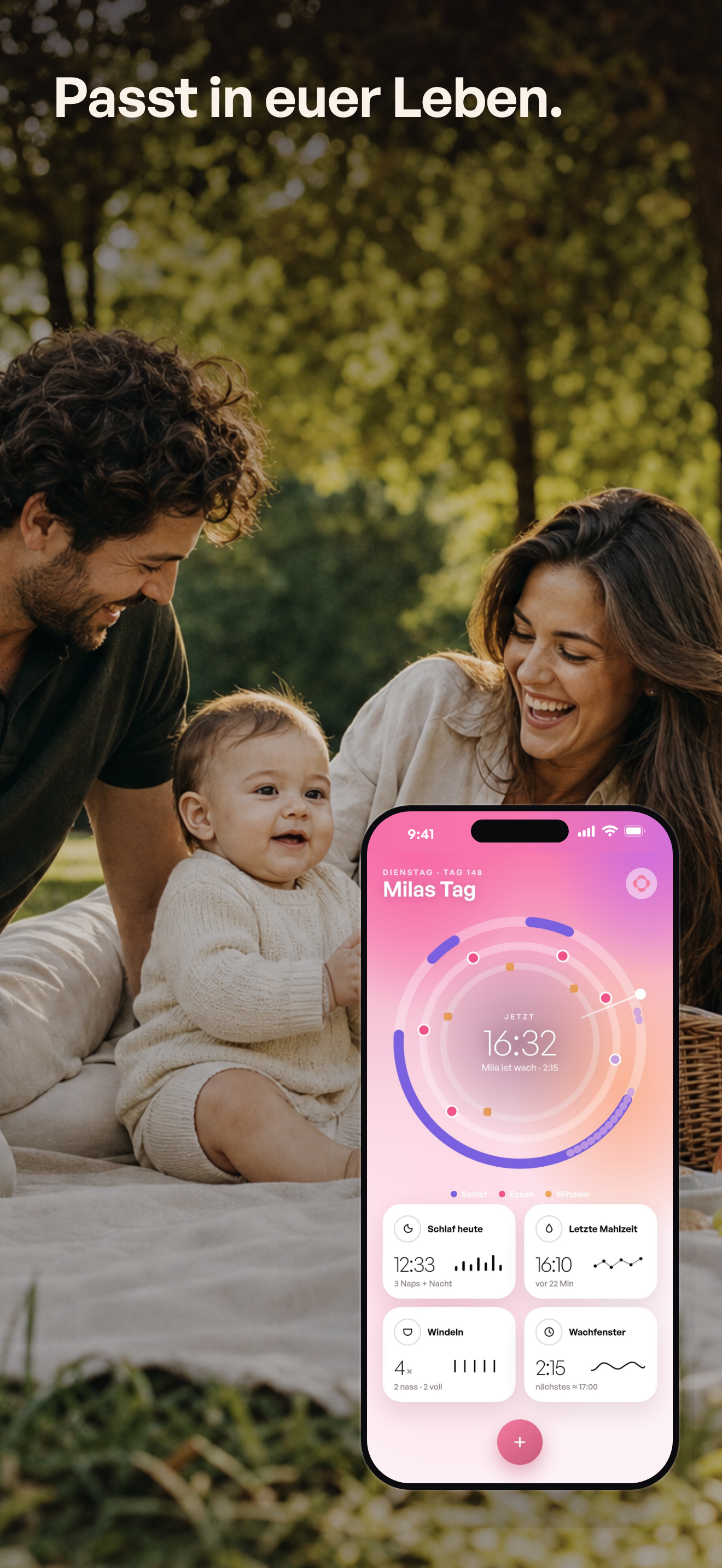
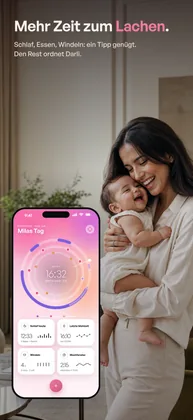
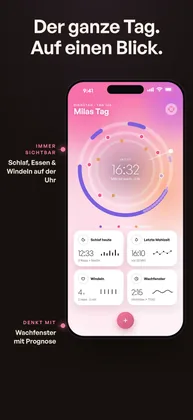
Darli is a baby tracker for iPhone. This page holds the facts, ready-to-use copy, print-resolution imagery and a direct contact – so you never have to ask for anything that could simply be written down here.
As of 3 September 2026. We update this page whenever something actually changes.
Three lengths, all cleared for publication. Use them as they are or cut them down.
Darli is a baby tracker for iPhone that logs sleep, feeds and diapers in a single tap and predicts the next sleep window from the baby’s own rhythm.
Darli is a baby tracker for iPhone. Sleep, nursing, bottles, diapers and pumping each take one tap – from the Lock Screen and through Siri, too. From the rhythm logged so far, the app estimates when the next sleep window opens. Two parents can connect their iPhones and see the same picture.
Darli is a baby tracker for iPhone, built by independent developer Tibor Stefán in Munich. Sleep, nursing, bottles, diapers and pumping are logged with a single tap – straight from the Lock Screen, the Dynamic Island or through Siri, designed for one hand, a baby in the other arm and a dark room. A day ring shows the whole day on one clock. From what has been logged so far, Darli estimates when the next sleep window opens; that calculation runs on the device. Two parents connect their iPhones with a QR code and see the same picture. Darli is available in six languages and needs no account.
Described plainly, without marketing. All of it ships in the current version.
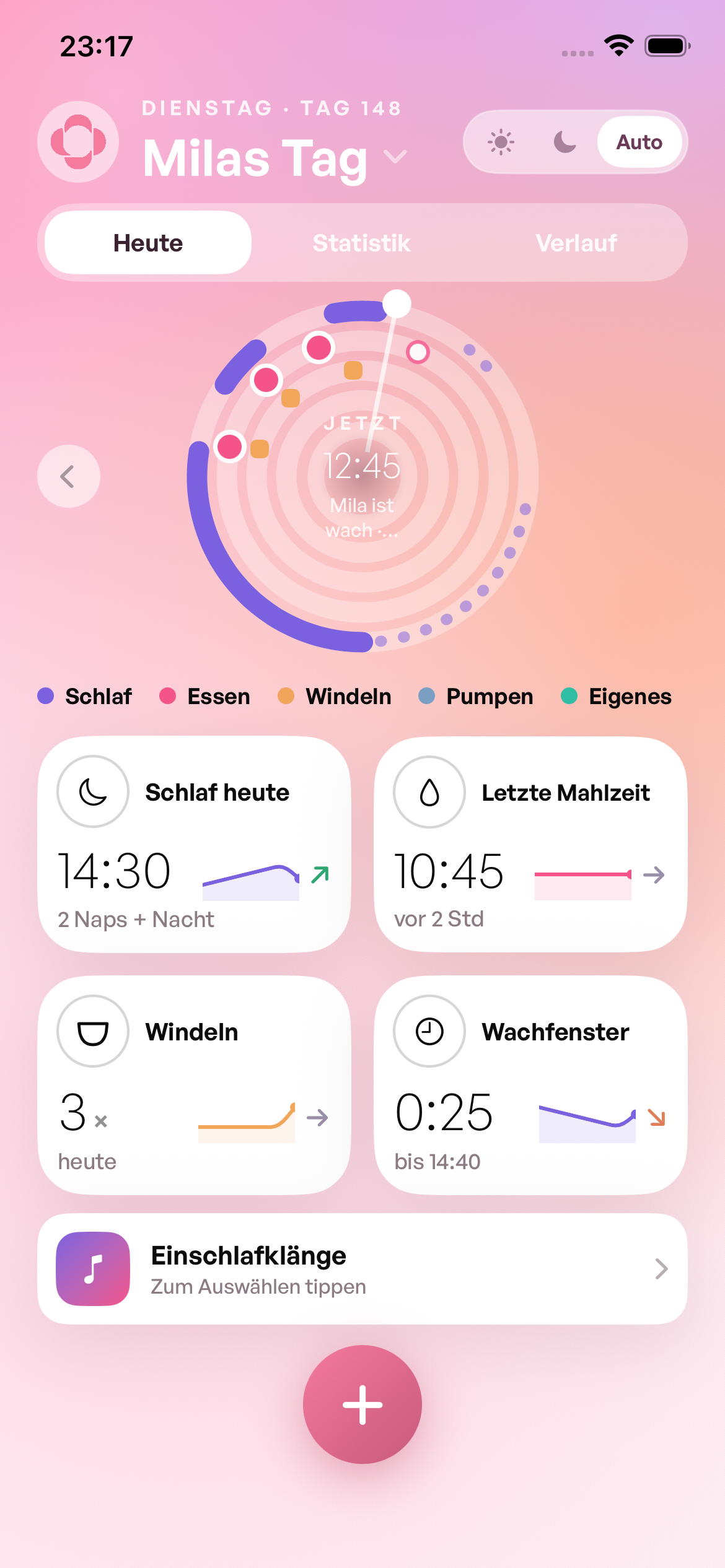
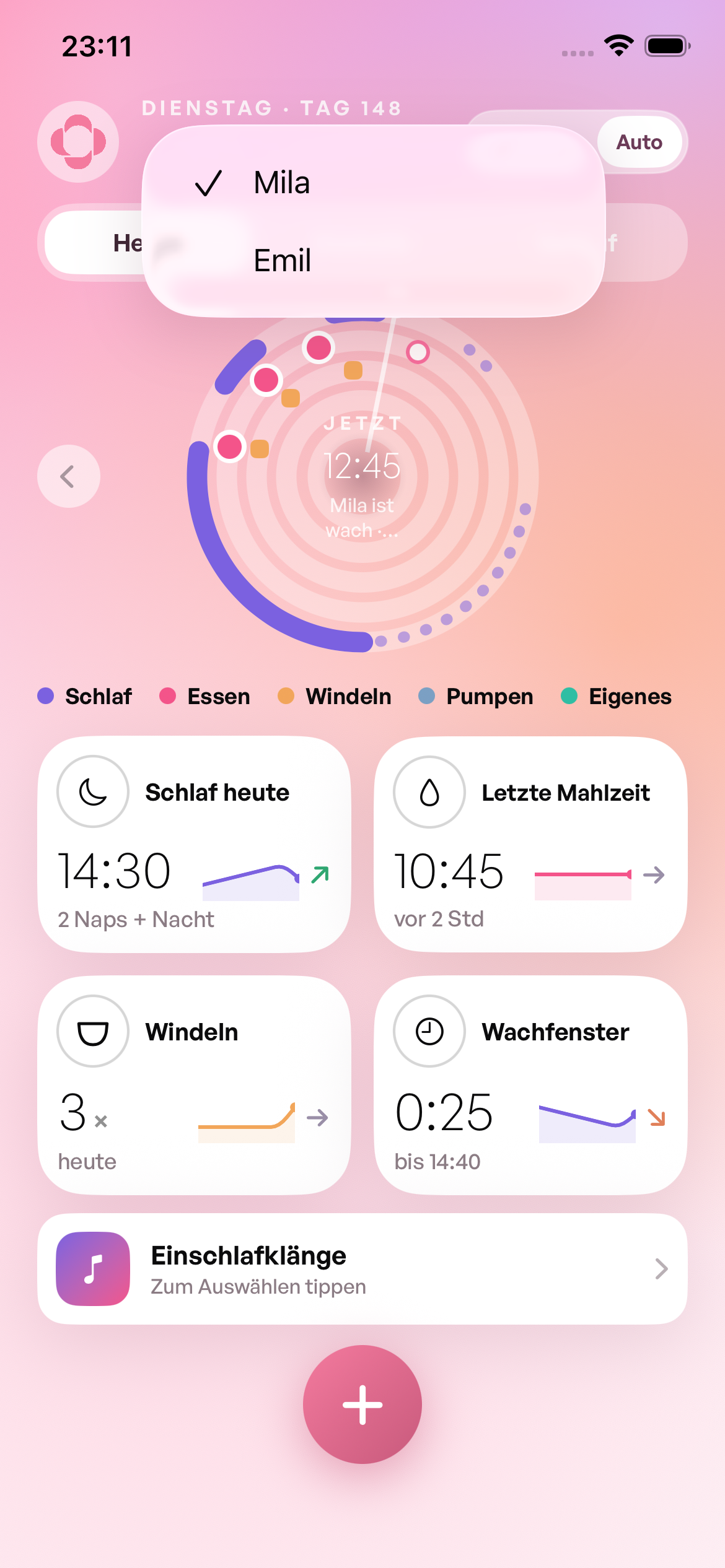
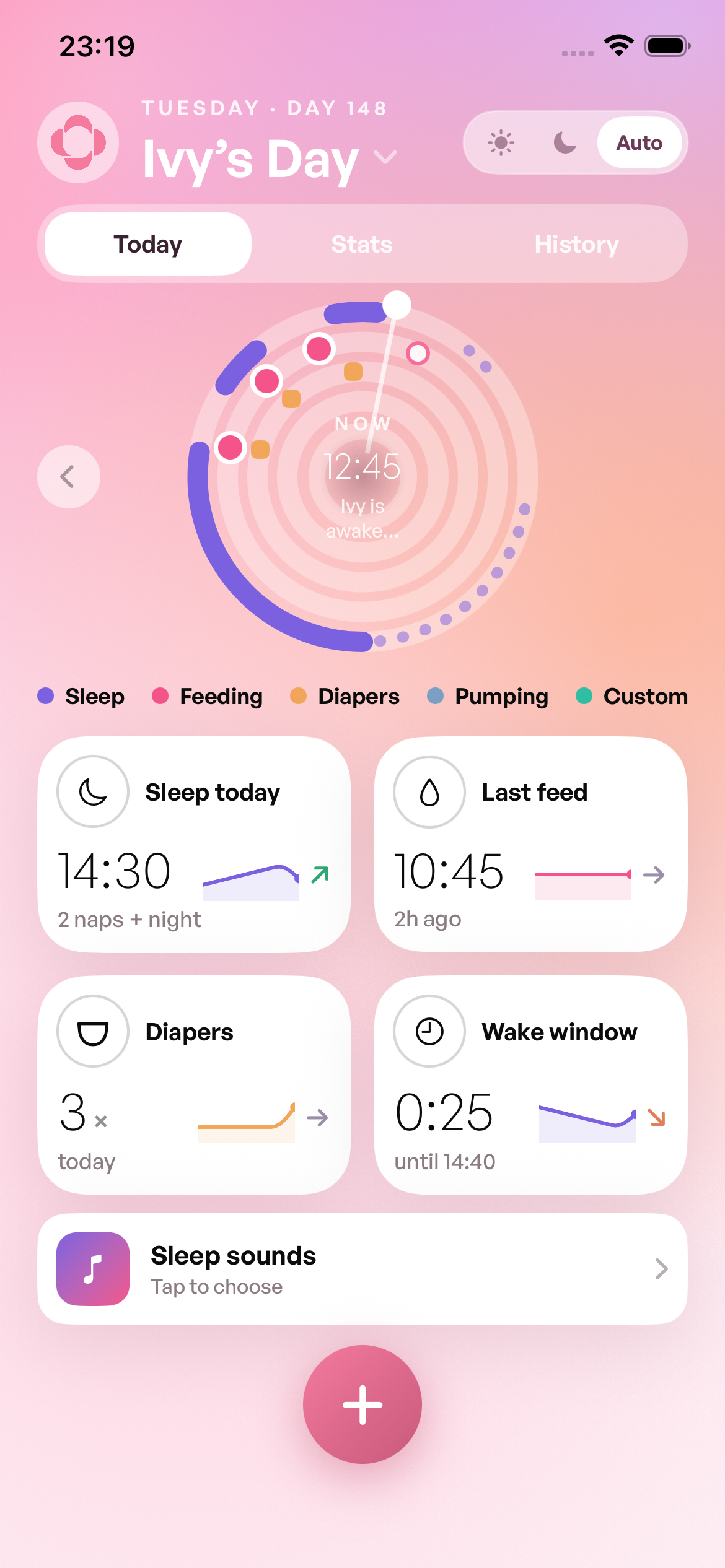
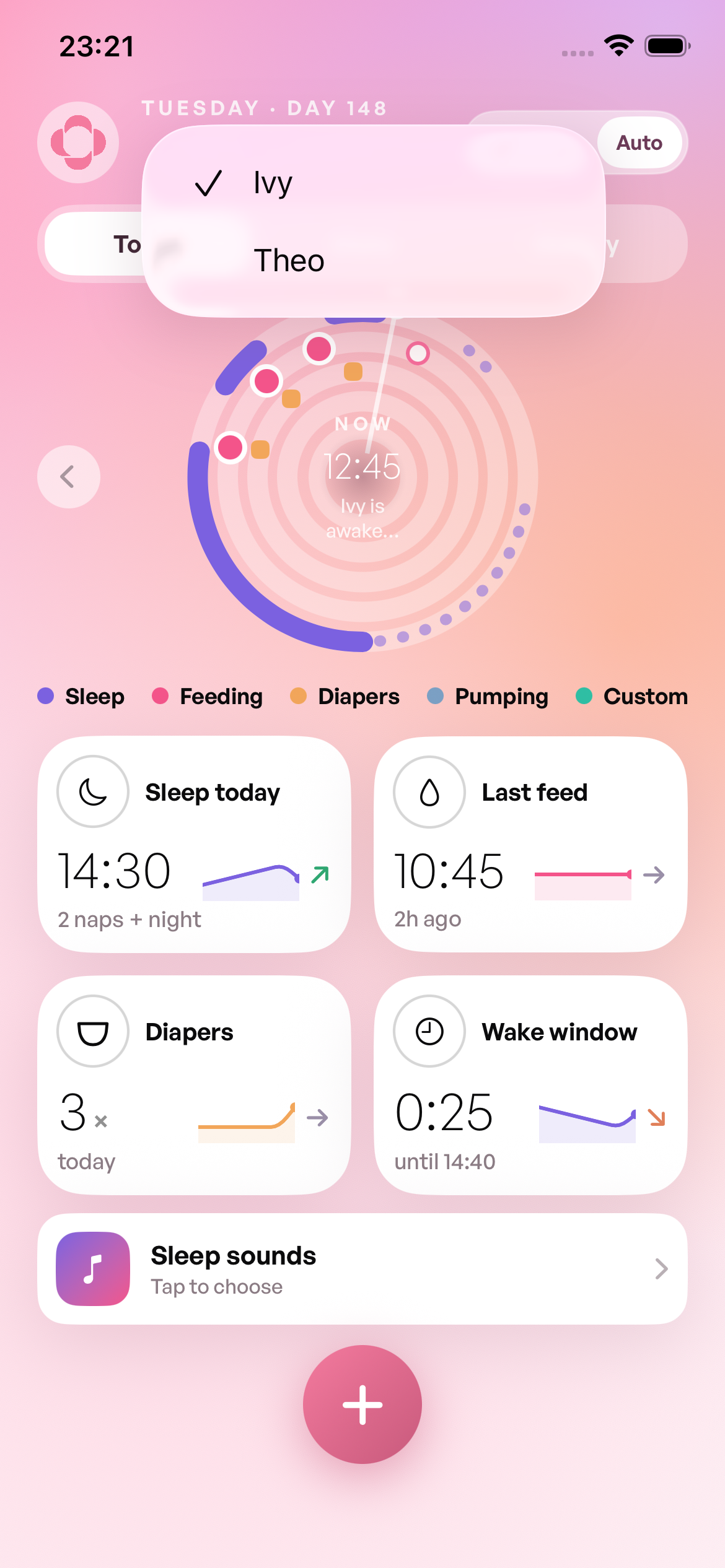
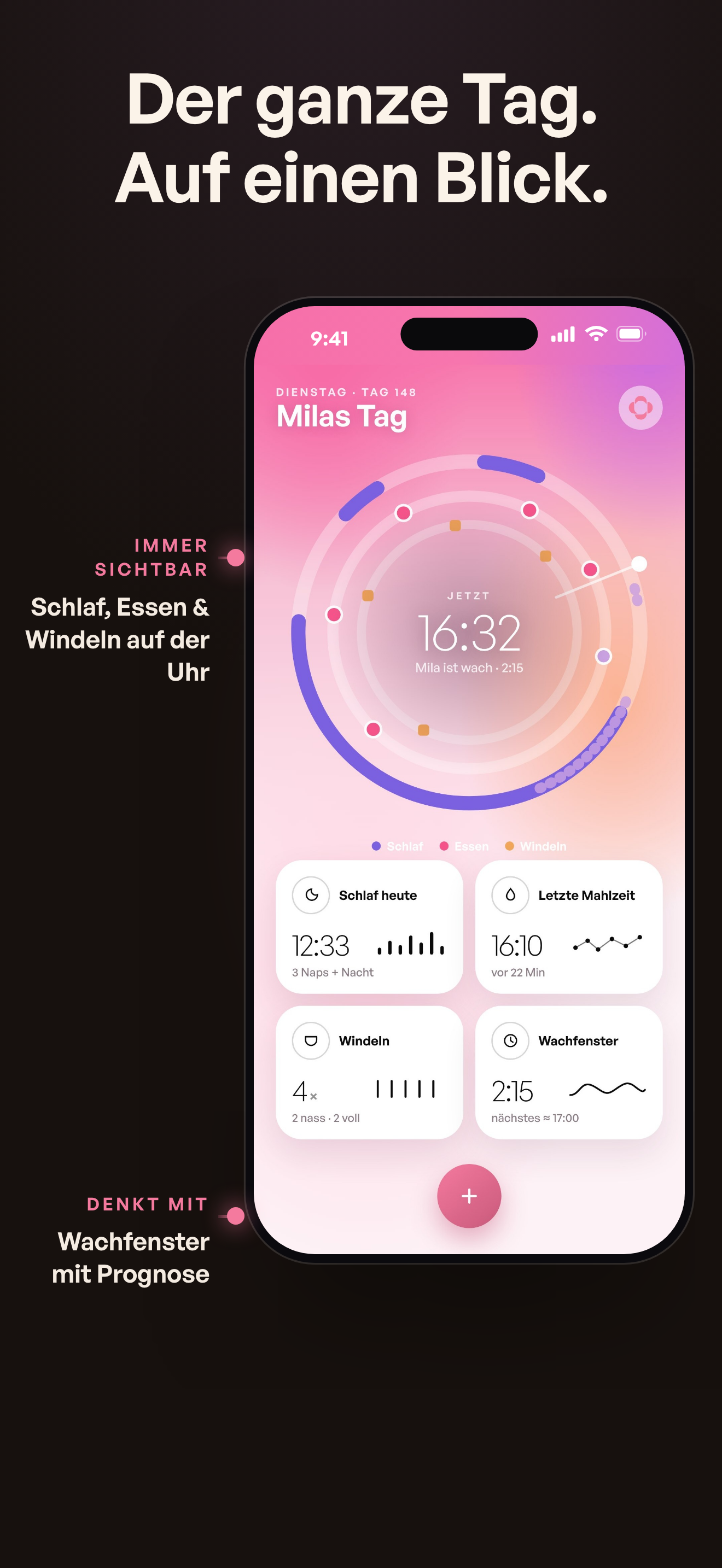
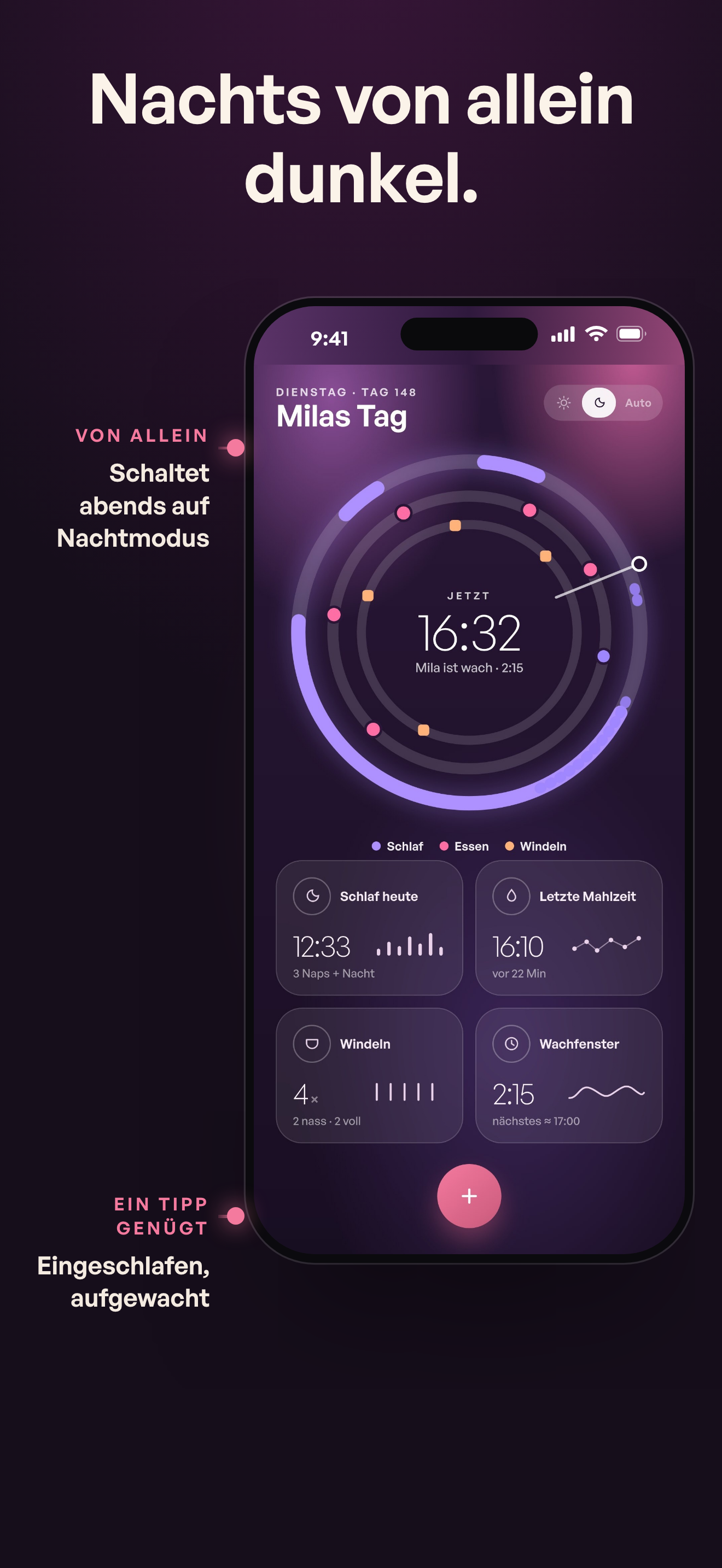
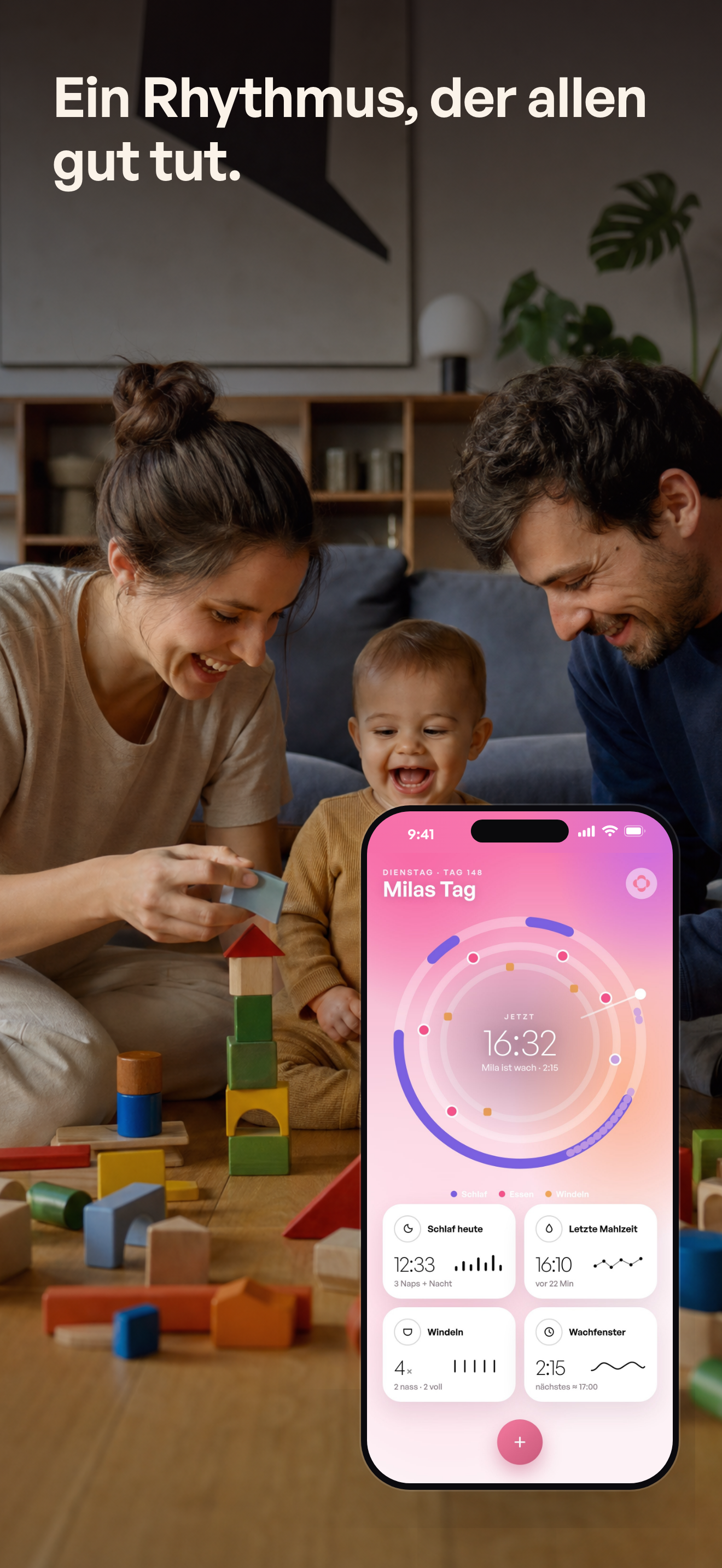
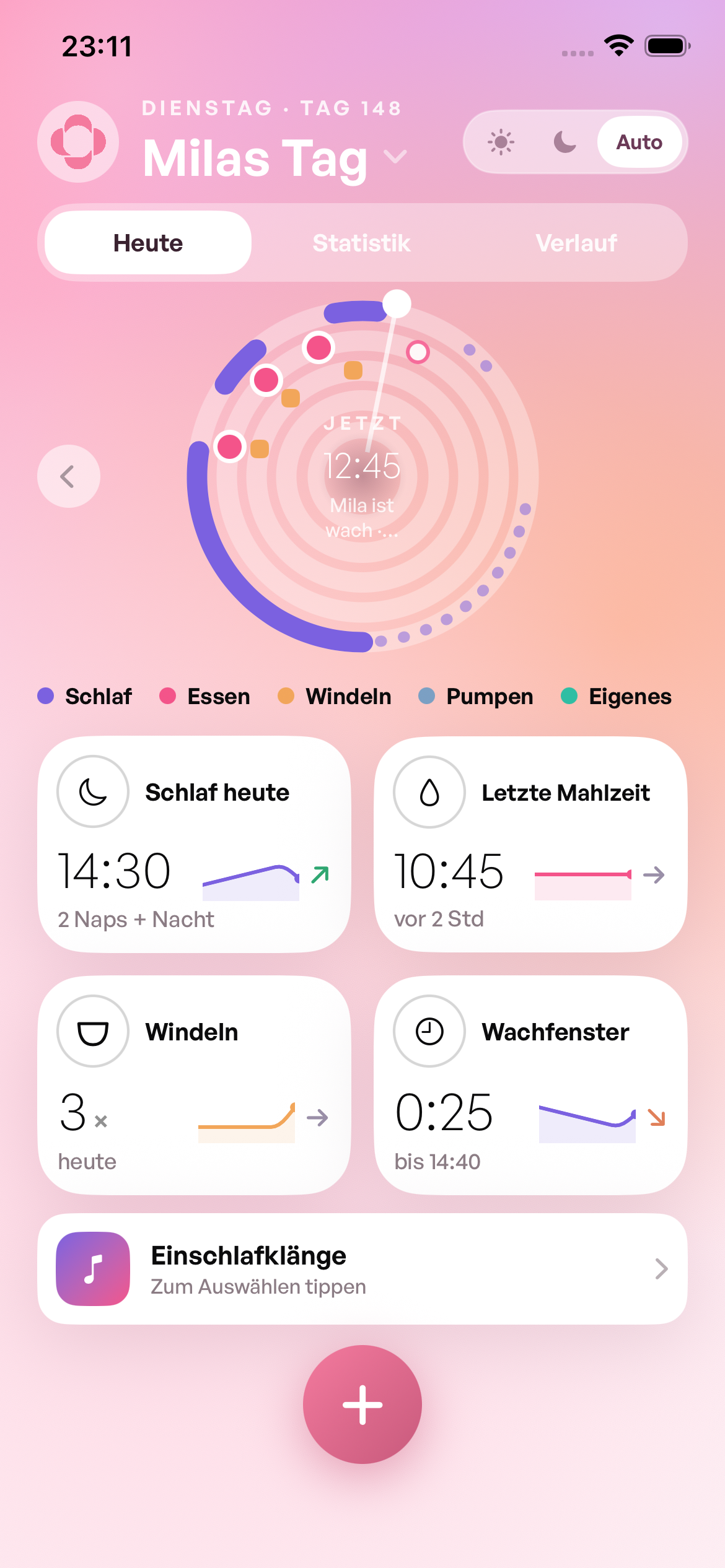
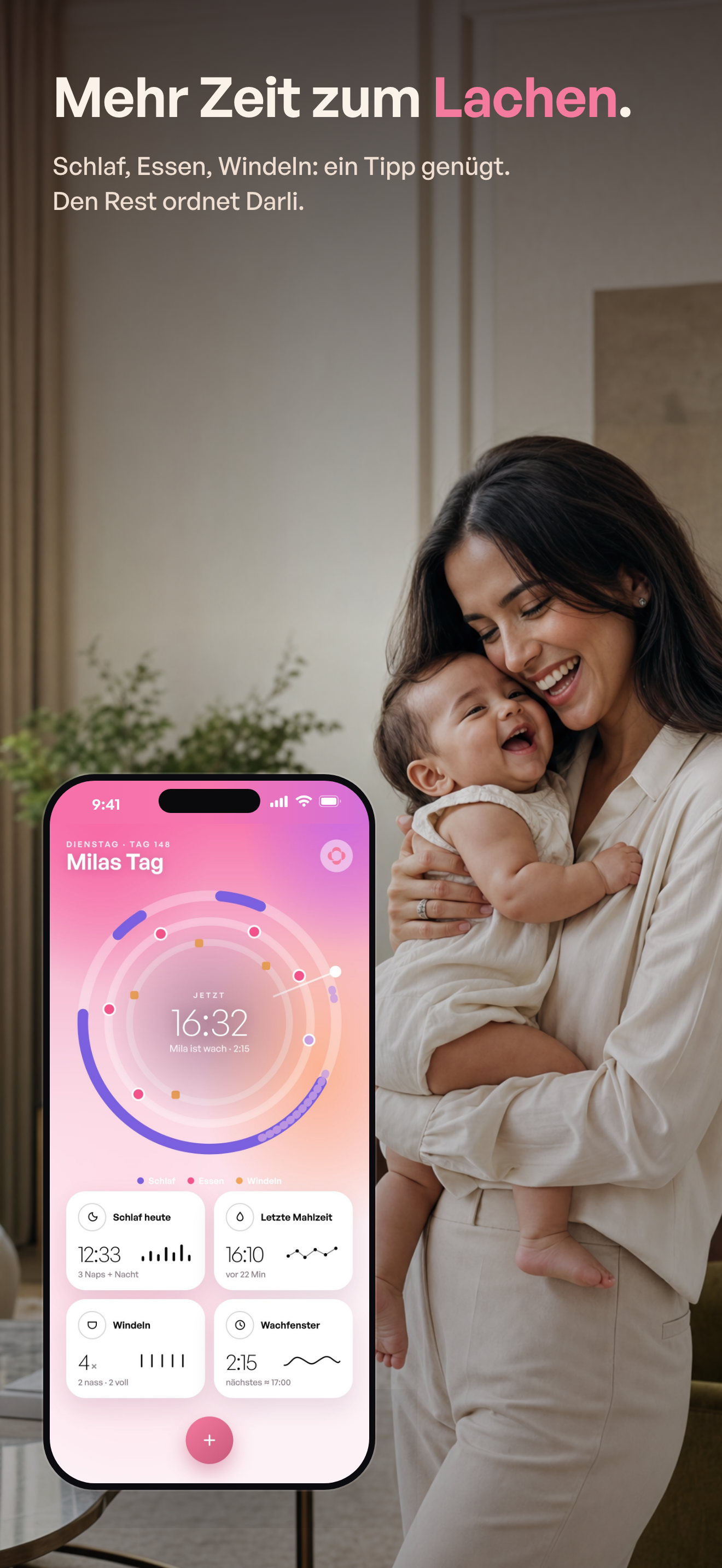
Sleep, feeding, diapers and pumping sit as rings on one clock. A single glance shows how the day has gone.
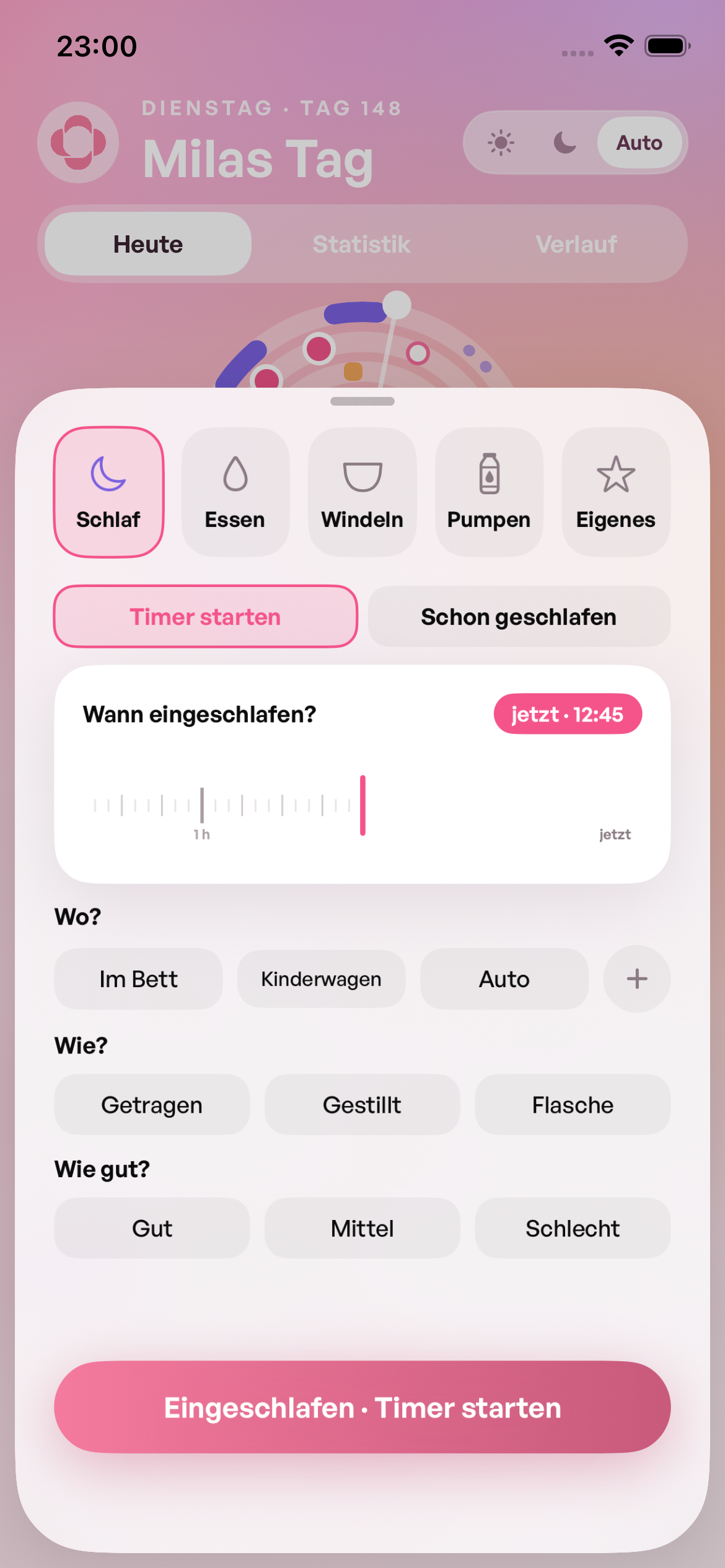
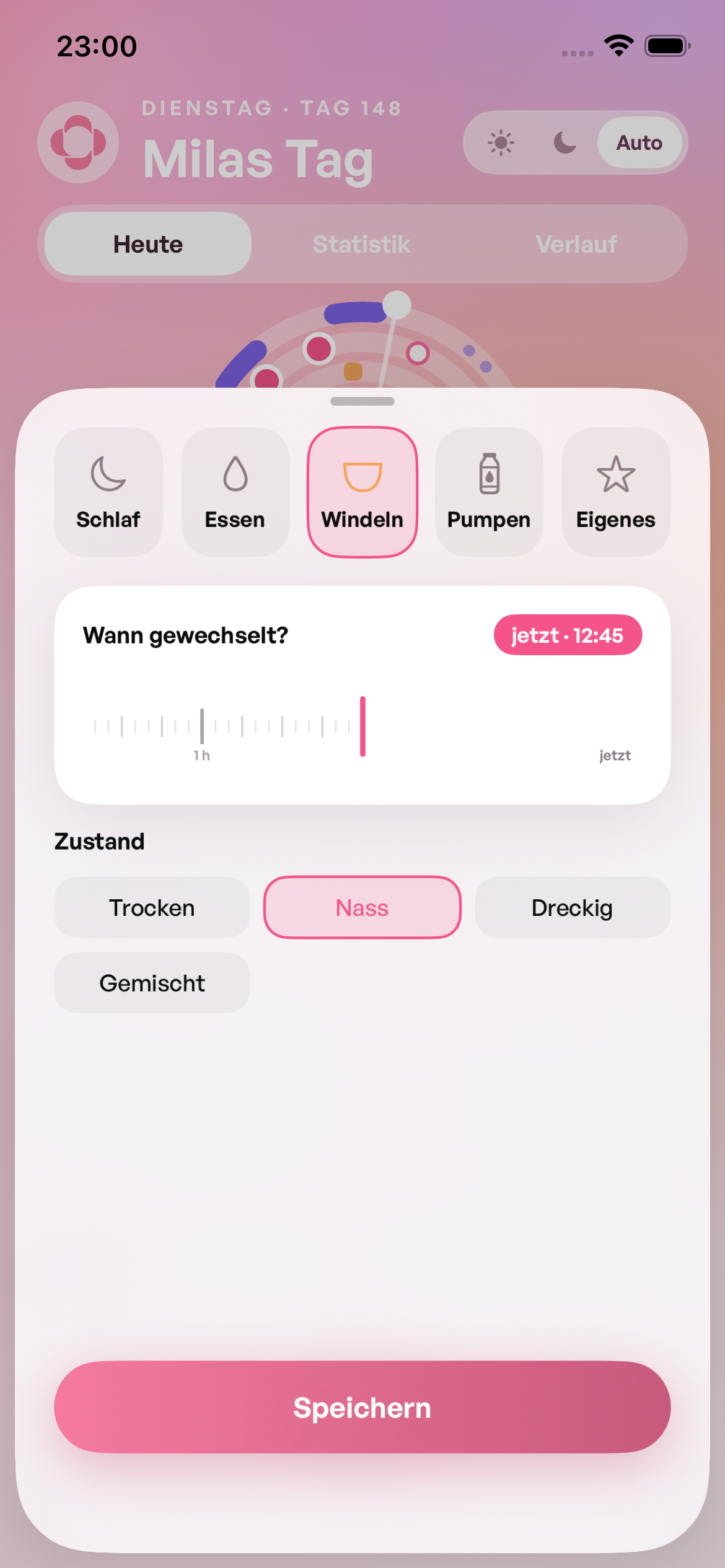
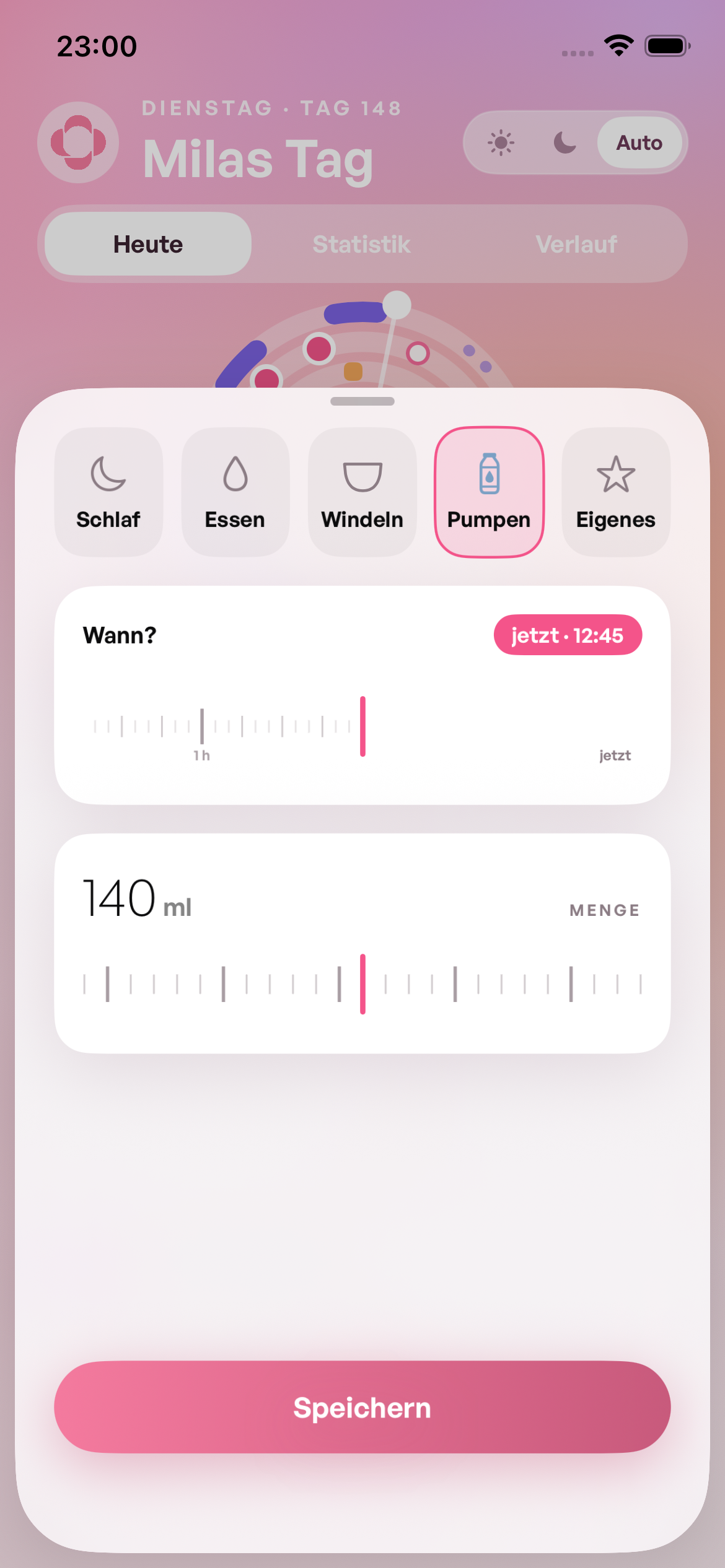
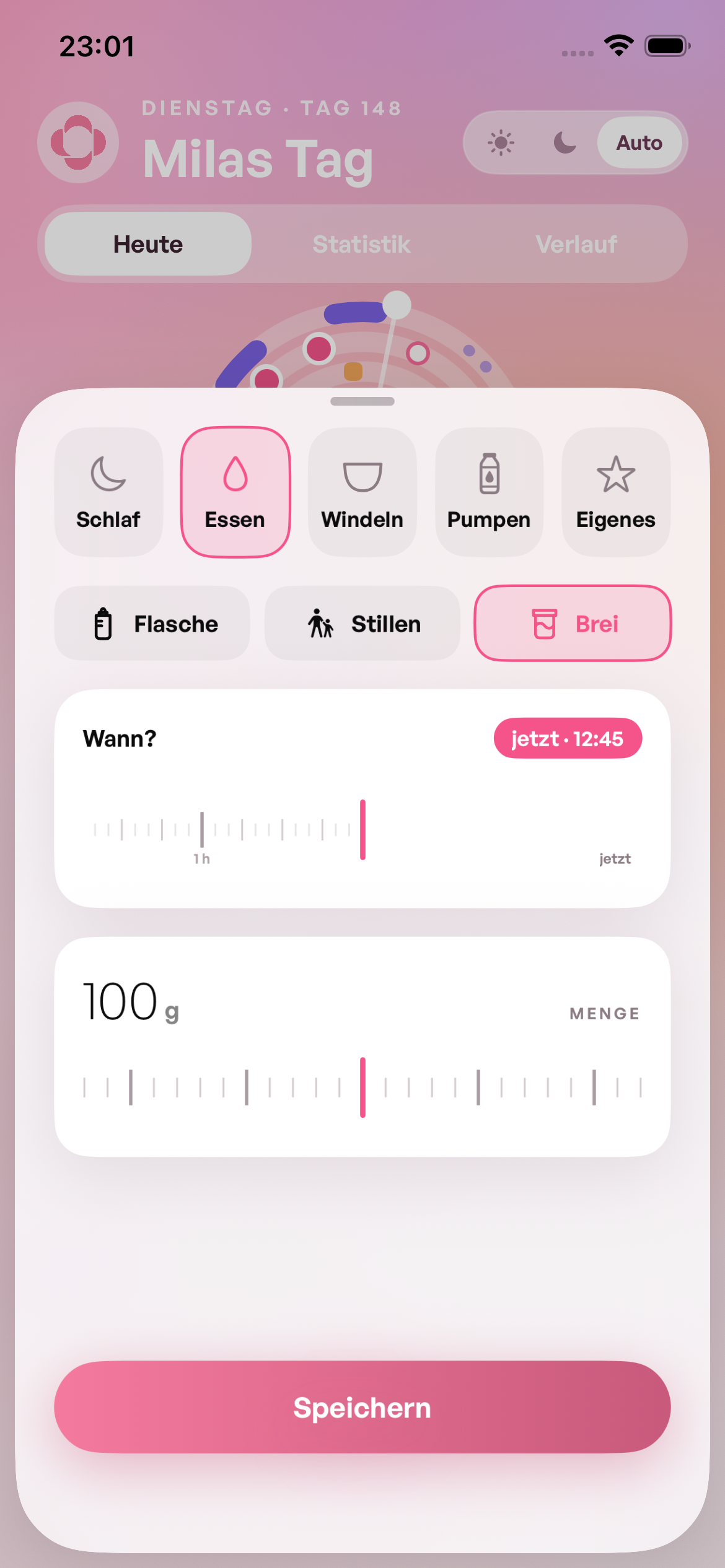
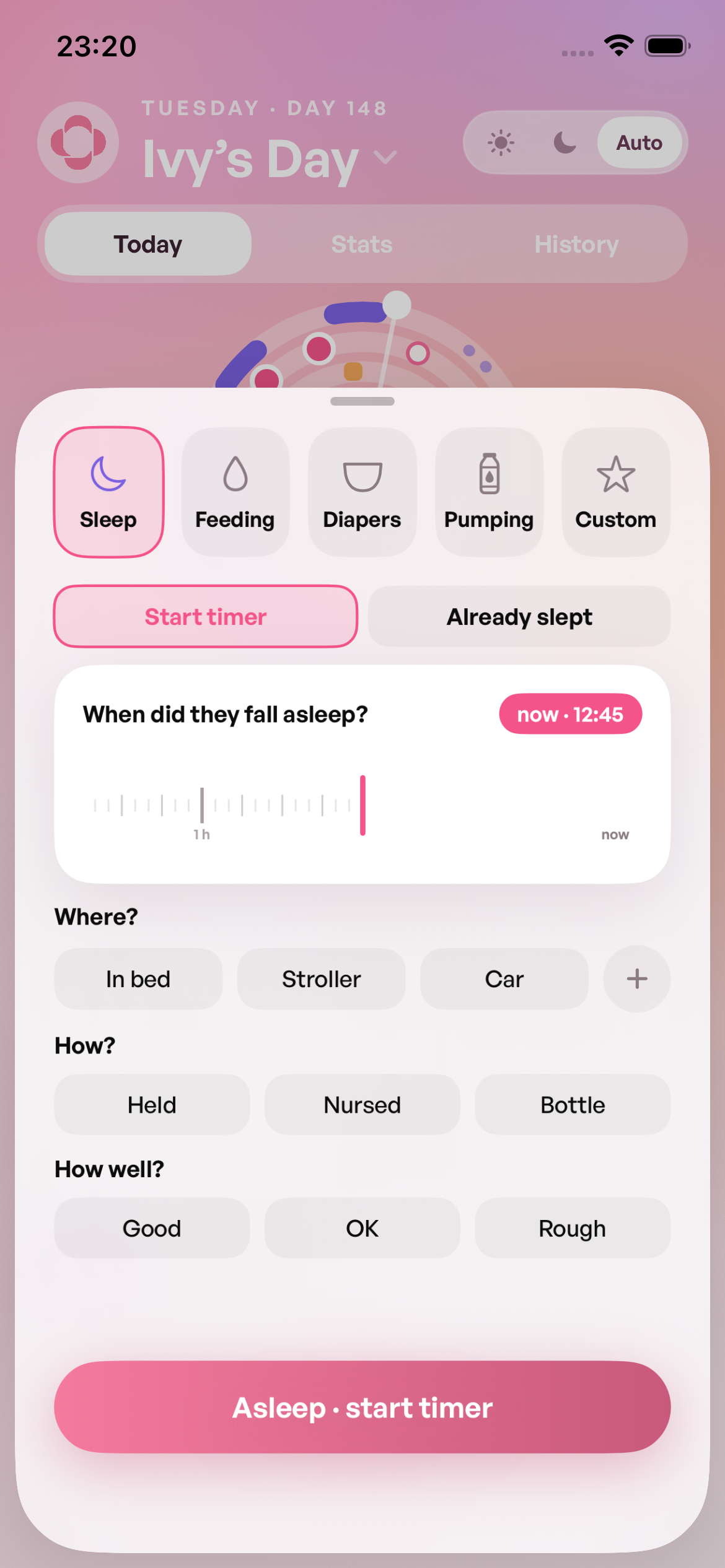
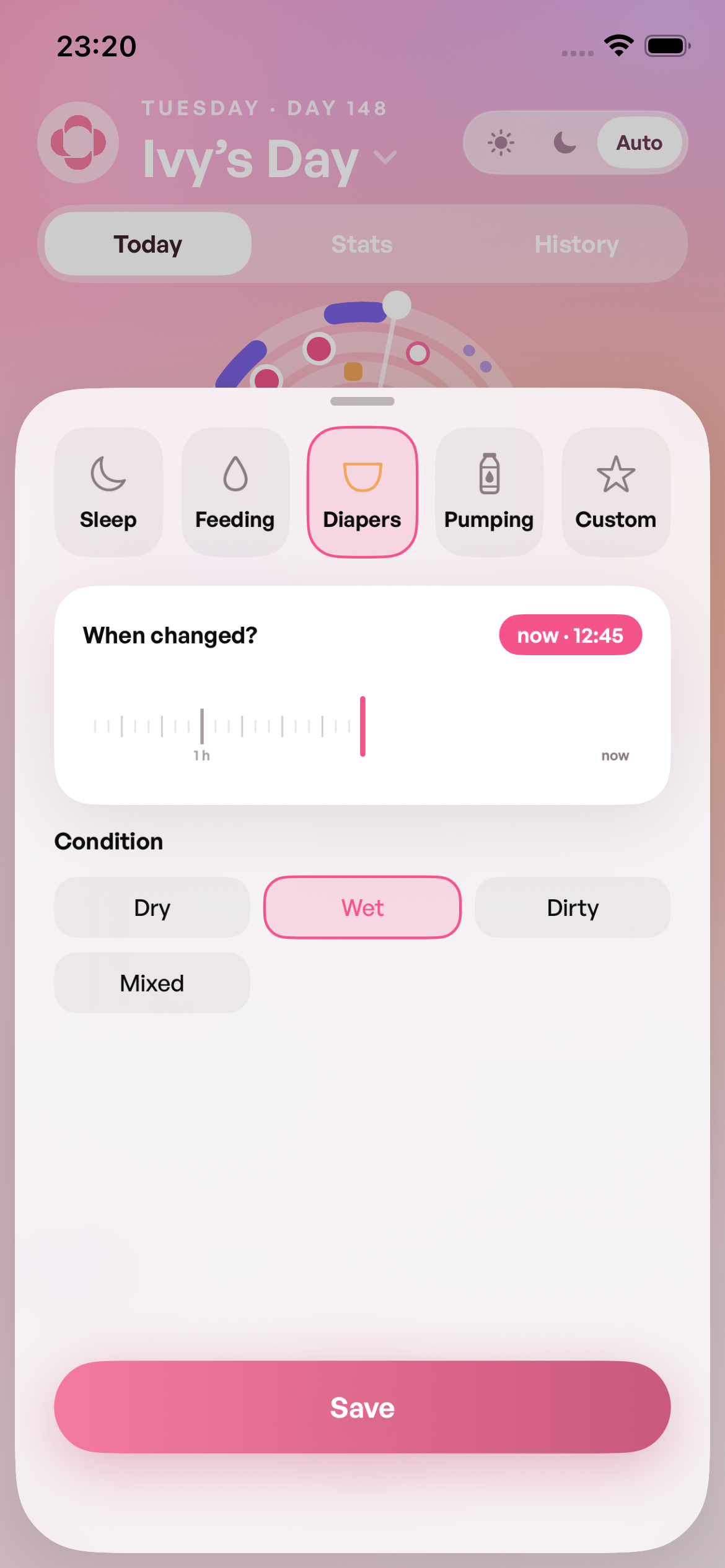
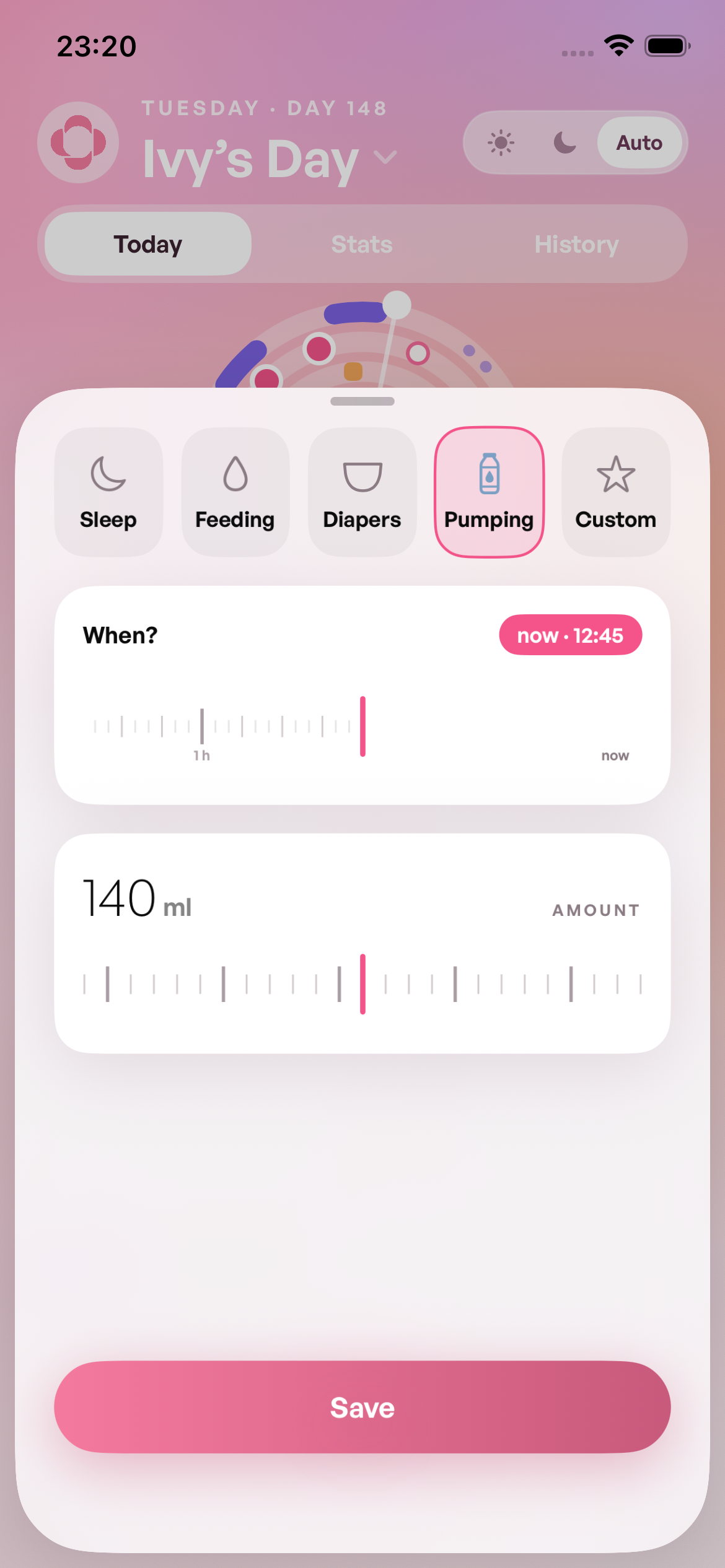
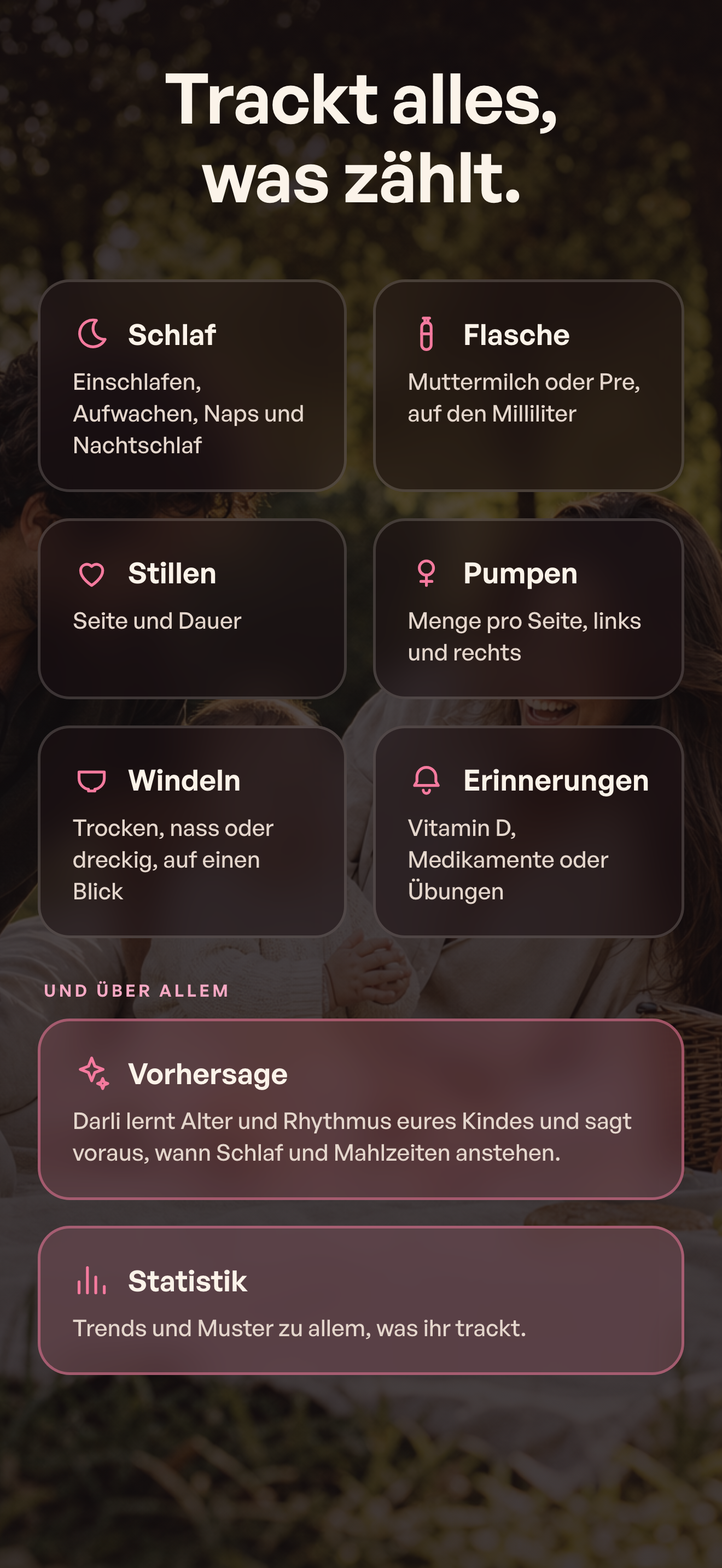
An entry takes one tap. The time can be nudged backwards afterwards, for when you remember later.
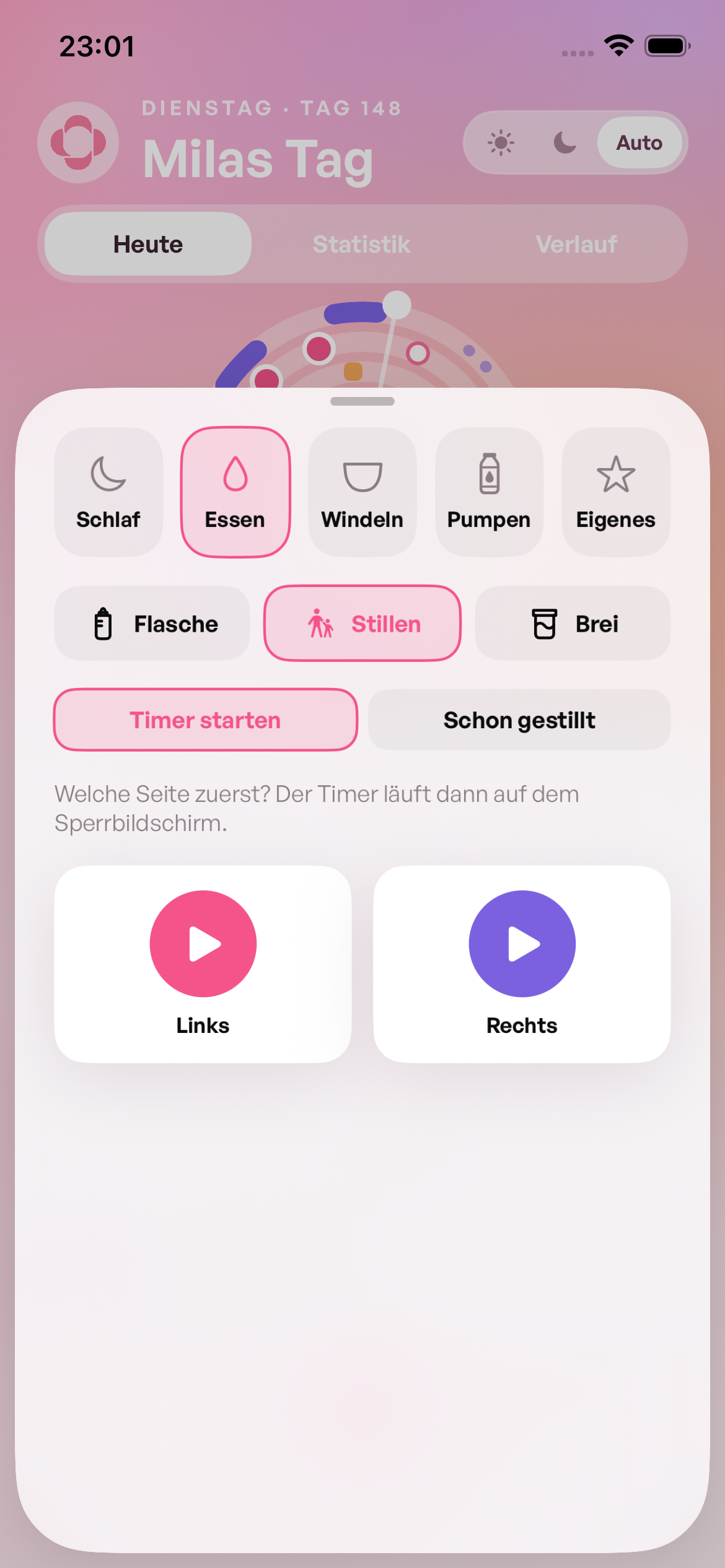
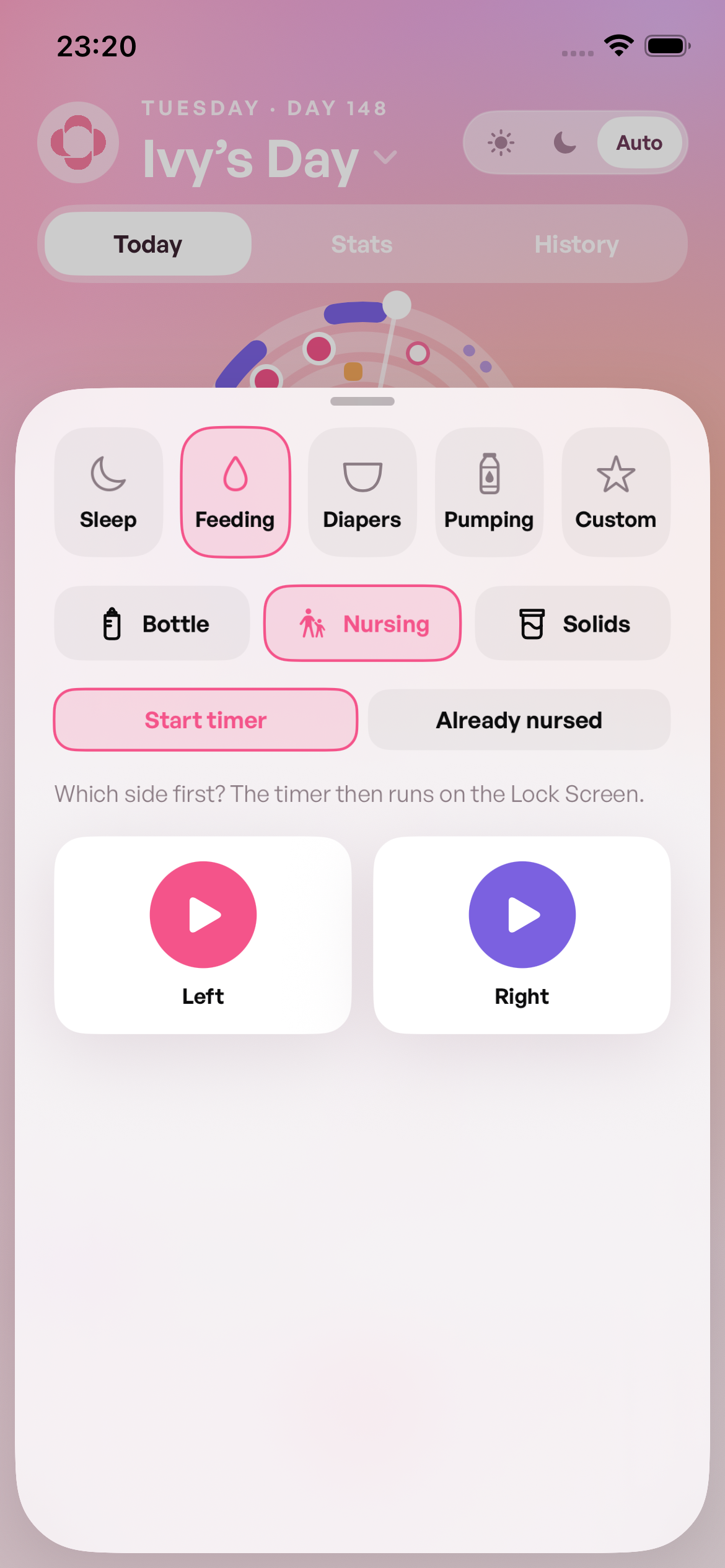
Sleep and nursing timers run as a Live Activity in the Dynamic Island and on the Lock Screen. Siri handles the common entries.
Darli learns the baby’s age and rhythm and estimates when the next sleep window opens. For the first few days it says plainly: “Darli is still learning.”
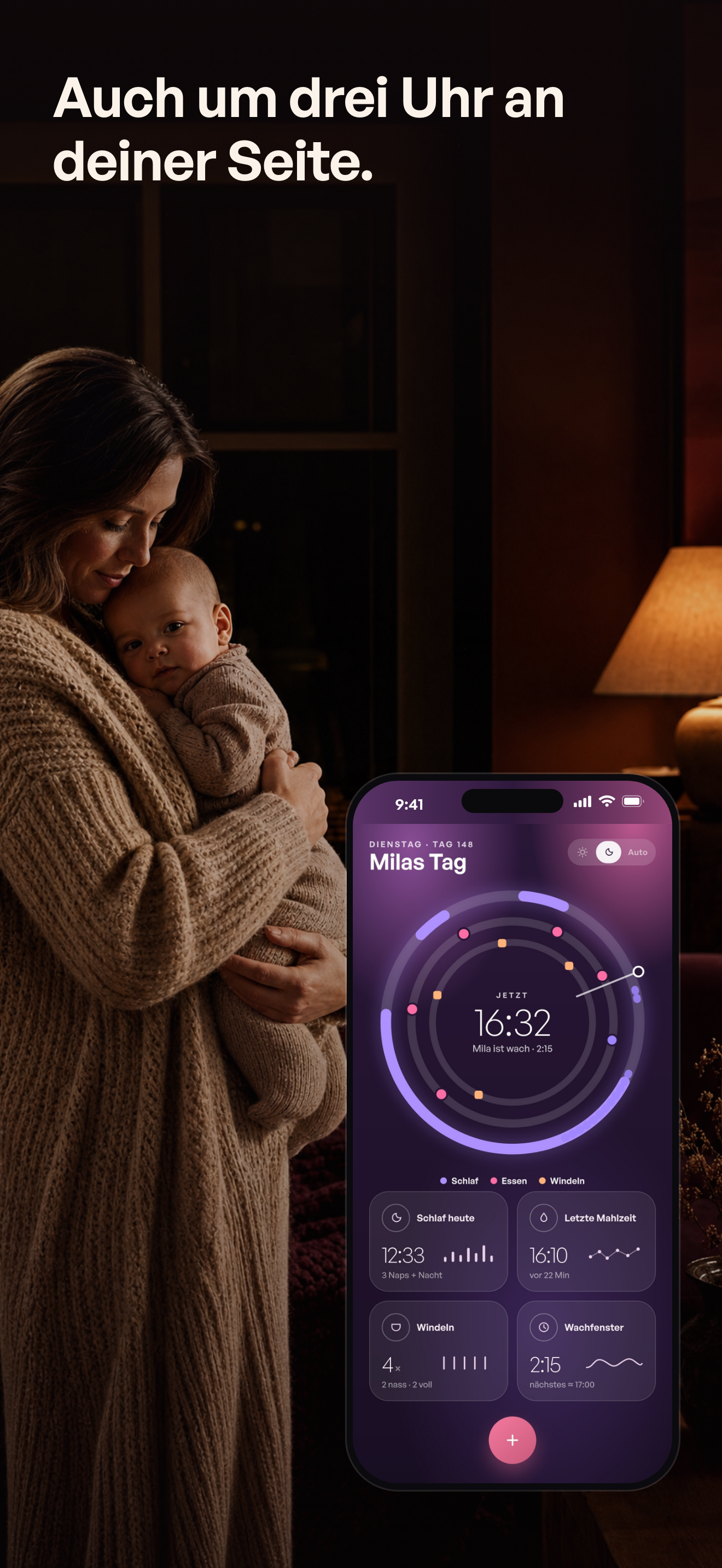
In the evening the interface turns dark on its own, so nobody is dazzled at three in the morning.
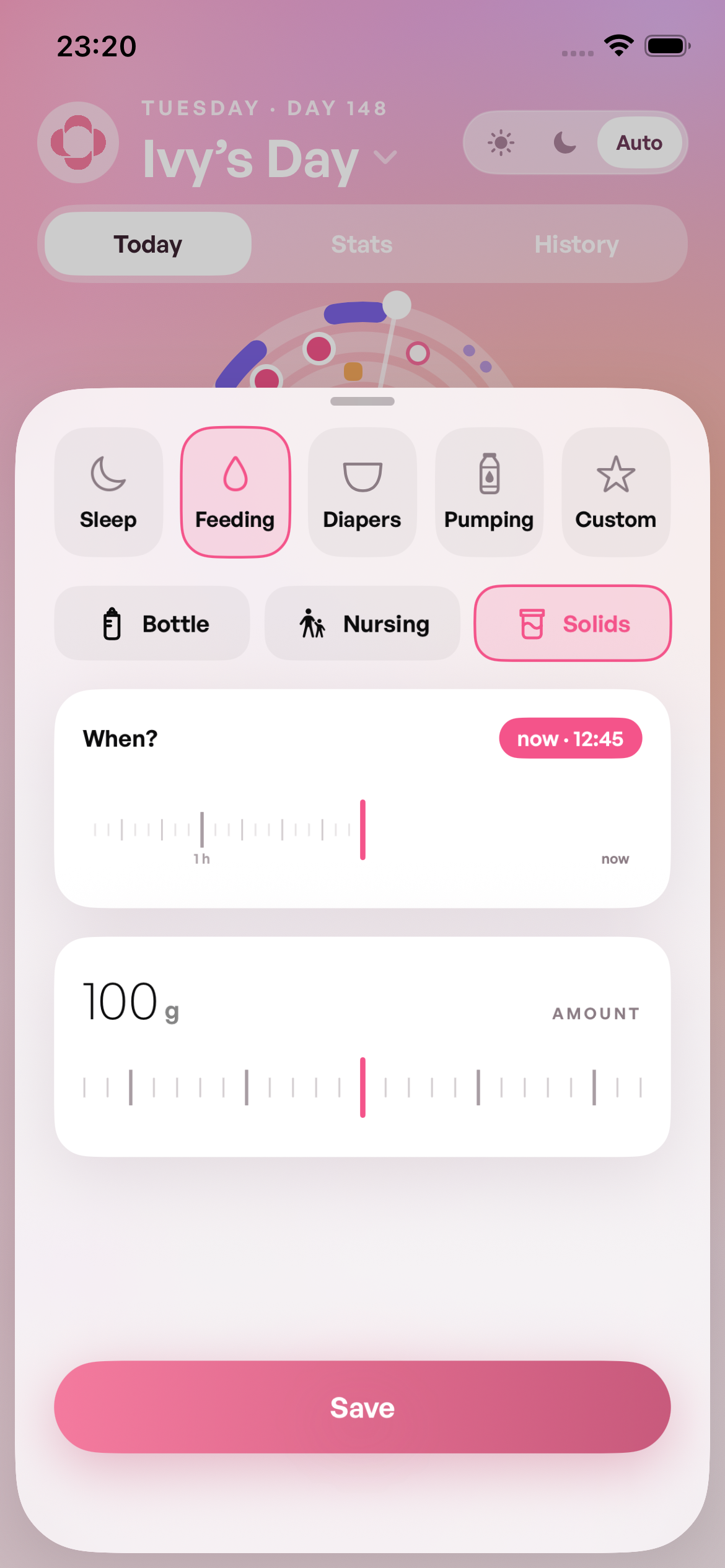
Nursing with side and timer, bottles with amount and milk type. Solids can be switched on.
A second iPhone joins by QR code. From then on both parents see the same picture – with no account.
Siblings can be added and switched at the top.
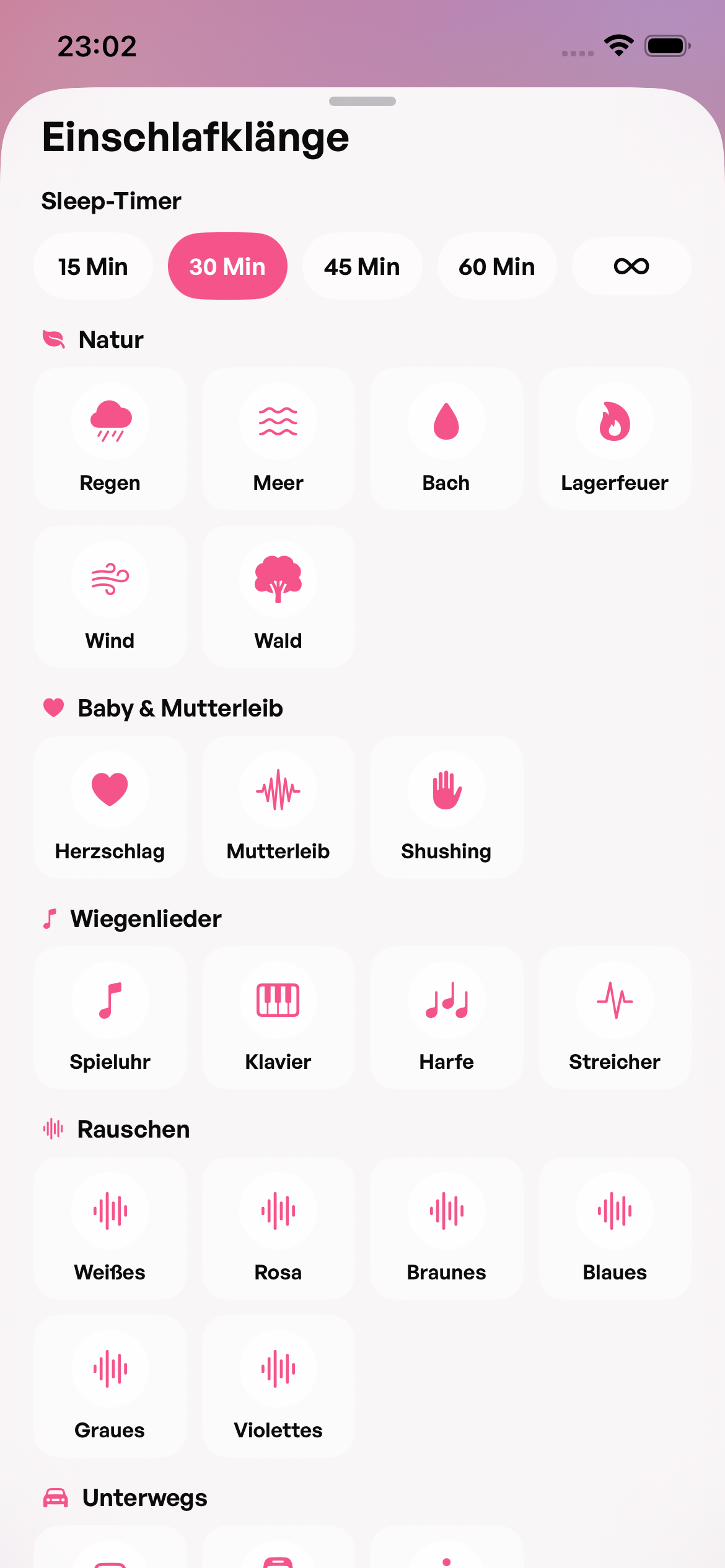
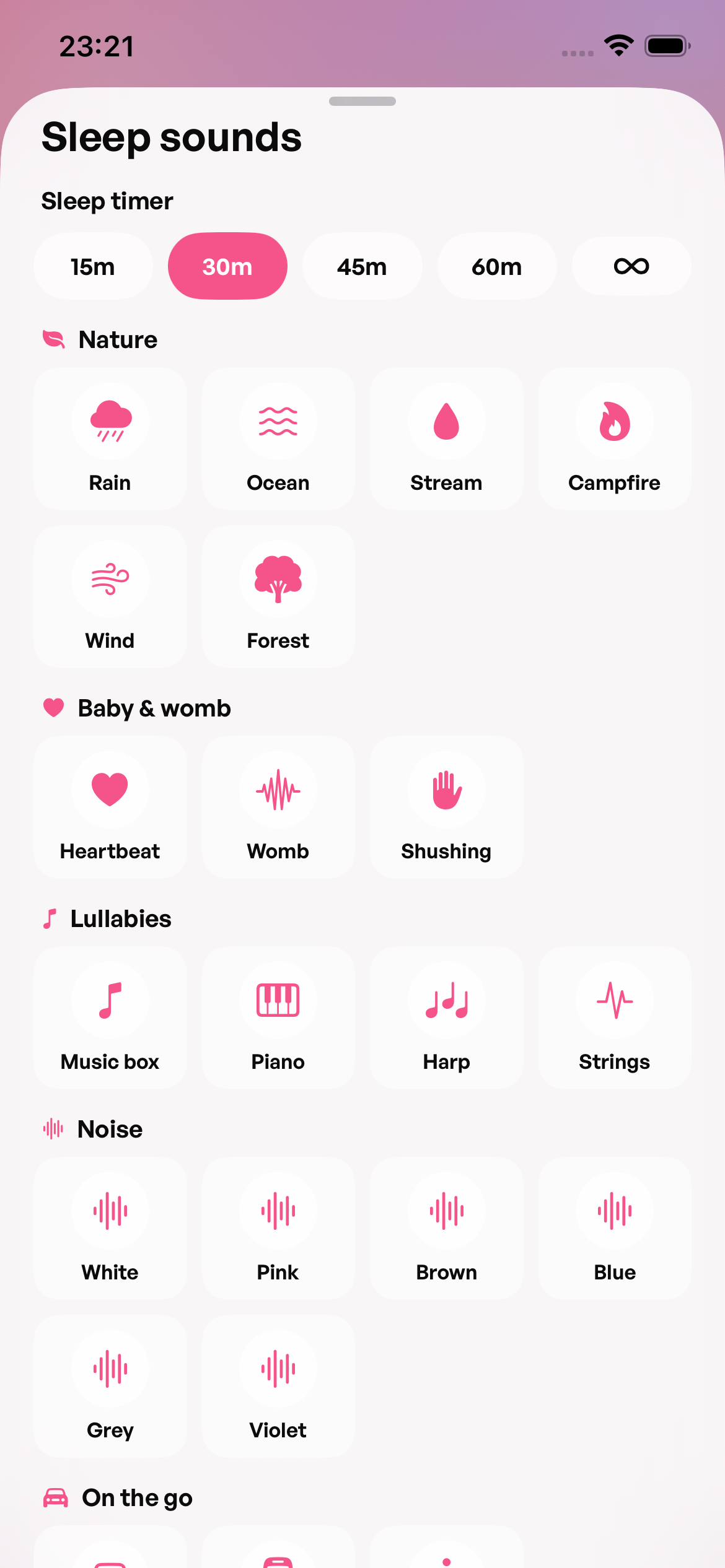
24 sounds with a timer, and switchable off. Noise, nature, music box.
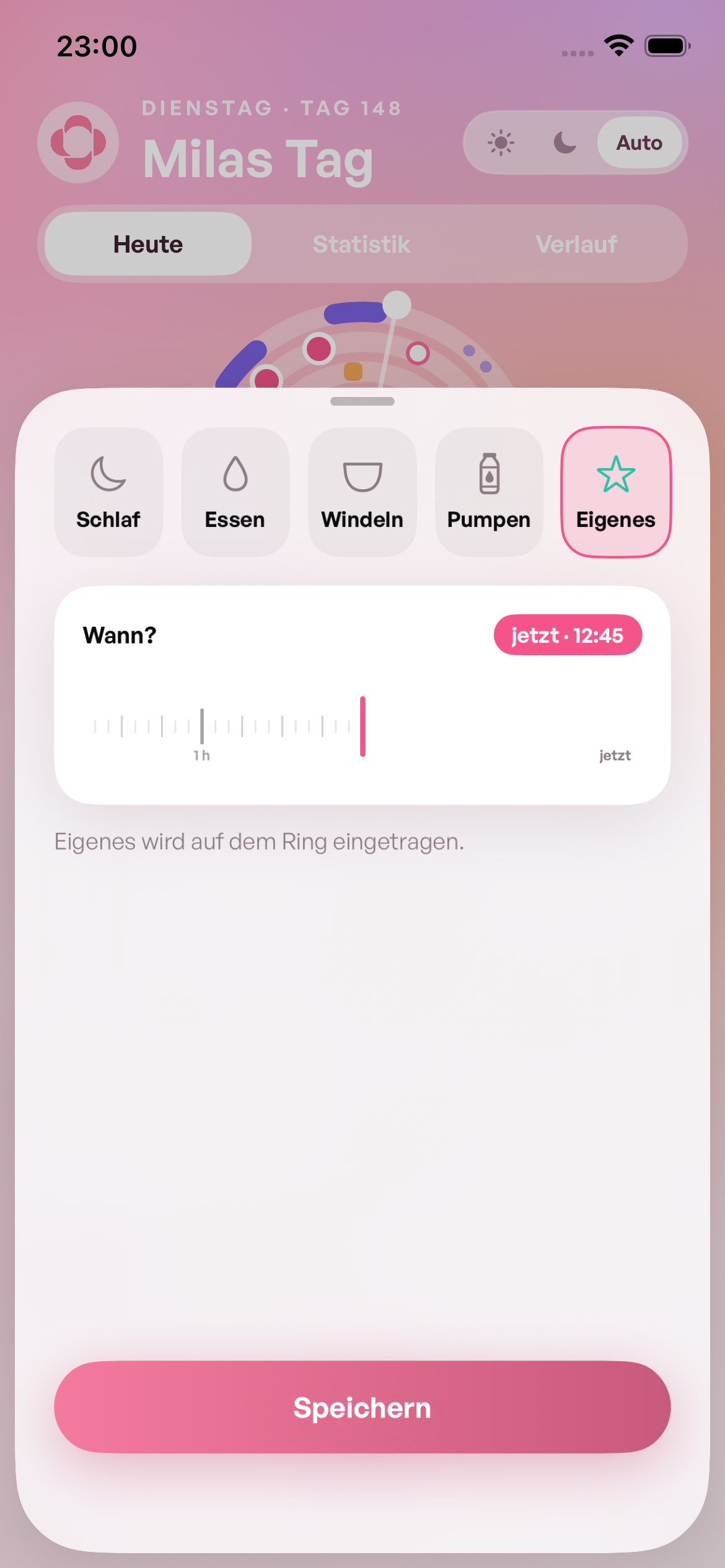
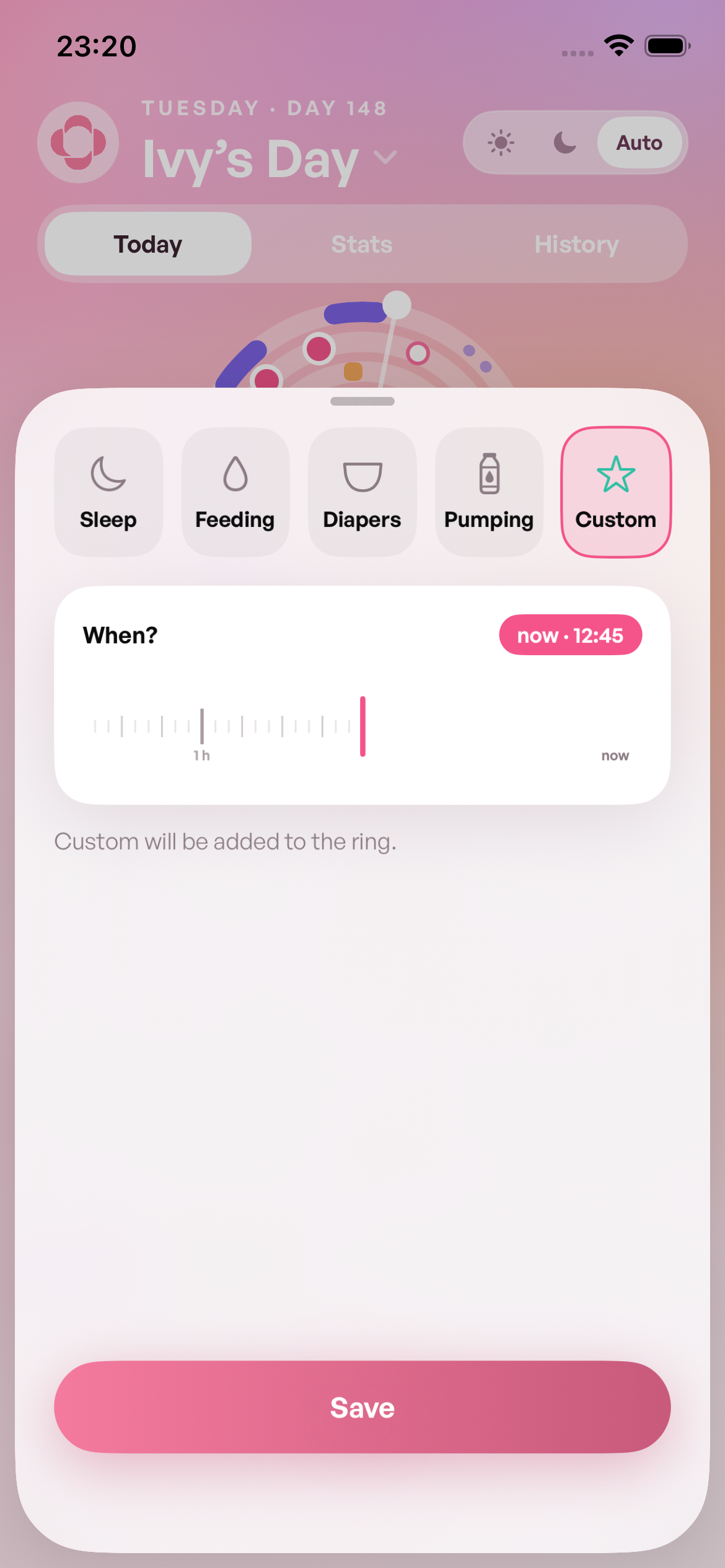
Vitamin D, medication, exercises – as their own ring with repetition, off by default.
These limits are part of the story. We would ask you to write them down with it.
We say openly where AI is involved and where it is not – not least because it is a fair question to ask of a product for parents.
The wake window is calculated locally on the iPhone, using a formula. No language model and no cloud AI service is involved. The baby’s entries go nowhere for it.
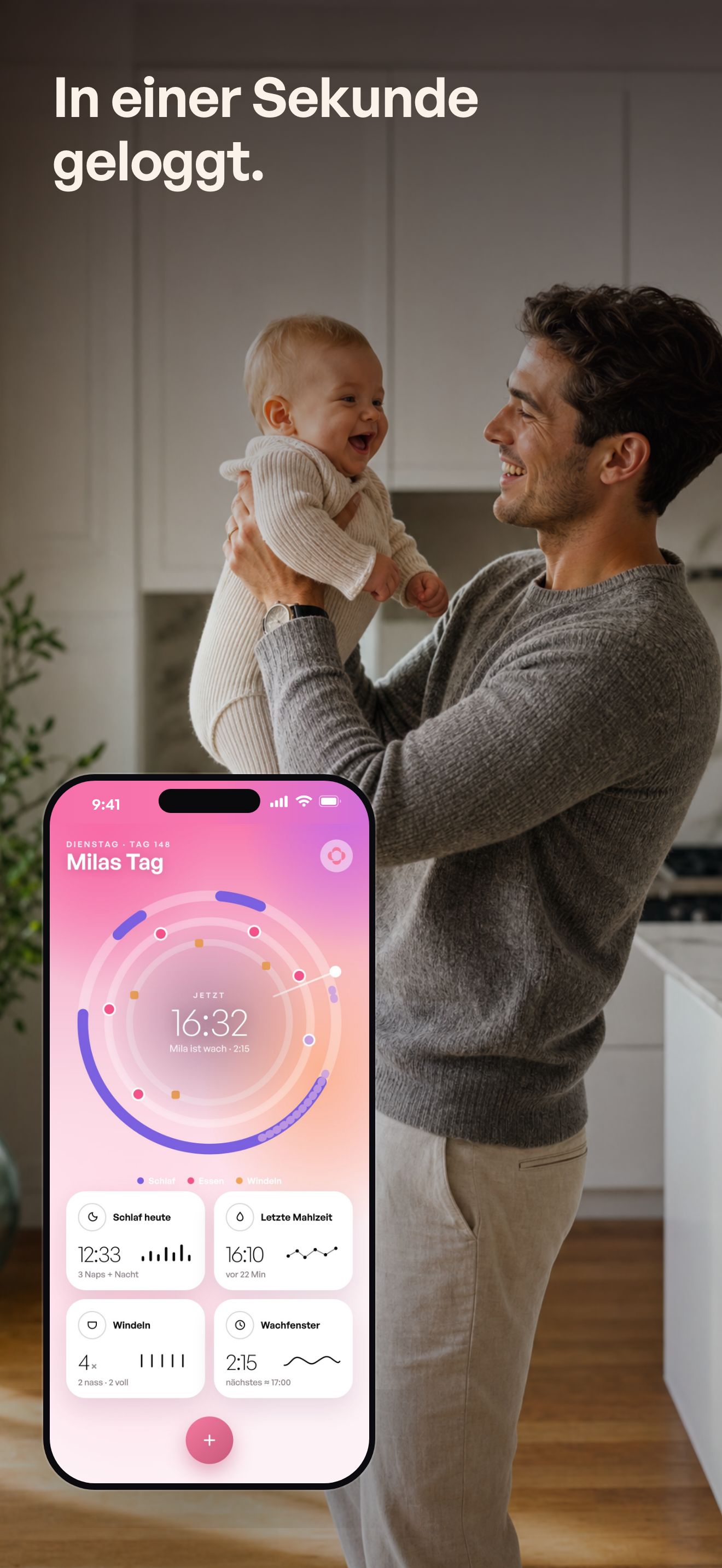
Illustrations, website copy and video on darli.app and in the App Store artwork were produced with AI assistance. The people shown are not real.
On support.darli.app a language model answers from the help page. It is labelled as an AI assistant and refers medical questions to a doctor or midwife.
darli.app/en/ai-transparency goes through each point in turn.
Suggestions, not requirements – and honestly ordered by where Darli actually has something to add.
New parents carry sleep times, feeds and diapers around as a mental list. The interesting question is not whether an app can store that, but which part of the load technology genuinely takes away – and which part it does not.
Built for one hand, a baby in the other arm and a dark room. A design angle: the Lock Screen instead of opening an app, large targets instead of fields, night mode on its own.
When both parents see the same picture, who ‘owns’ the overview shifts. That is a conversation about default parents and the division of labour, not about a feature.
The wake window forecast runs locally, on a formula rather than a language model. A reason to ask when AI is actually needed – particularly for sensitive data about a child.
Tracking sounds like more phone. The counter-argument: if an entry takes a second and works from the Lock Screen, software shortens the time on the device instead of extending it.
Darli is built by one person, in Munich, without investors, and ships in six languages. How that works – and where it runs into limits – is the founder story behind it.
Everything here is cleared for editorial use. Click an image to download it at full resolution.
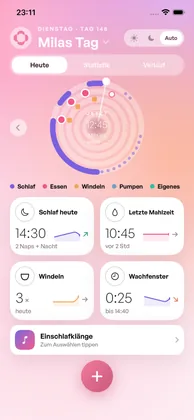
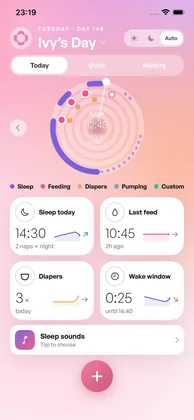
Real captures from the app, without marketing text. The babies are called Mila and Ivy in the demo data; none of this is real user data.
The artwork from the App Store, with text and photography. The people shown are AI-generated and not real.
Press enquiries, interviews, review access and promo codes go to the same address as everything else. Just put “Press” in the subject line.
Darli is developed and published by Tibor Stefán in Munich, Germany. Address and legal details are in the imprint.